Drive the Future, Today.
Your trusted guide to electric vehicles. We cut through the marketing hype to bring you real-world range, honest reviews, and expert buying advice.
Trending EVs
Discover the most popular electric cars on the market, featuring their official claimed range versus what you can actually expect in the real world.


The Big Question: Buy Now or Wait?
EV technology is evolving rapidly. Solid-state batteries are on the horizon, and charging infrastructure is growing. Is today the right time for you to make the switch?
- Analyze your daily commute
- Understand battery degradation
- Future-proof your investment
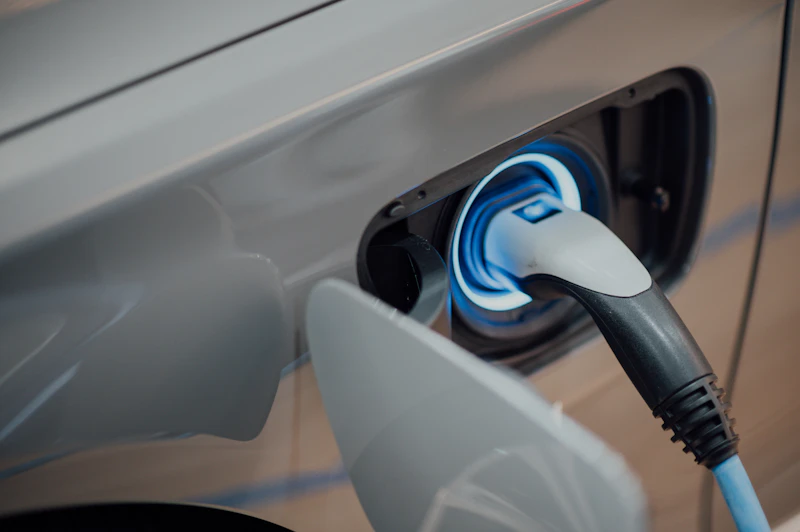
Your Ultimate Guide to EV Cars in India
The automotive landscape is shifting dramatically, and EV cars are at the forefront of this revolution. If you are considering making the switch, understanding the current market of EV cars in India is crucial. With soaring fuel prices and an increasing awareness of environmental sustainability, electric vehicles offer a compelling combination of lower running costs, zero tailpipe emissions, and a surprisingly smooth driving experience. Our goal at Evcarsguide is to help you navigate this transition with absolute confidence.
Finding the Best EV Cars in India
Choosing the right electric vehicle depends entirely on your daily usage, charging availability, and budget. The best EV cars in India right now range from compact city hatchbacks to luxurious, long-range SUVs. Local manufacturing and government subsidies have significantly lowered the barrier to entry, meaning buyers today have more high-quality options than ever before. When evaluating your options, we highly recommend looking past the official ARAI ranges and focusing on our tested real-world battery performance data.
Top Brands: Tata, Mahindra, and MG
Homegrown manufacturers are leading the charge. Tata EV cars currently dominate the Indian market, largely thanks to their highly successful Nexon.ev, Punch.ev, and Tiago.ev models. They have mastered the art of converting reliable ICE platforms into practical electric vehicles. Not far behind, Mahindra EV cars are making serious waves with their newly launched XEV 9e and BE 6e models, bringing futuristic designs, advanced born-electric INGLO architecture, and thrilling performance to the mainstream market.
On the other hand, if you value premium interiors and tech-loaded cabins, MG EV cars offer exceptional value. Vehicles like the MG Windsor EV are redefining what buyers expect in terms of comfort and charging speed in the mid-size segment.
Budget-Friendly and Practical Options
Electric mobility is no longer just for the wealthy. The market for EV cars under 10 lakhs is expanding rapidly. If you are looking for an affordable daily commuter, models like the Tata Tiago EV and MG Comet EV stand out as the cheapest EV cars in India. These compact vehicles are incredibly easy to maneuver in heavy city traffic, cost pennies per kilometer to run, and can easily be charged overnight using a standard 15A home socket.
For larger families, the demand for spacious electric vehicles is also being met. While the segment is still growing, the introduction of 7 seater EV cars in India is providing a viable, zero-emission alternative to traditional diesel MPVs. These larger EVs offer massive cabin space and silent highway cruising, making them perfect for family road trips—provided you plan your fast-charging stops along the route.
Looking Ahead: Upcoming EV Cars in India
The future is incredibly exciting. The roster of upcoming EV cars in India includes heavily anticipated models like the Maruti Suzuki eVX, the Hyundai Creta EV, and the stunning Tata Sierra EV. As battery technology improves with higher energy density and faster charging capabilities, range anxiety is quickly becoming a thing of the past. Moreover, the rapid expansion of public DC fast-charging networks across major highways means inter-city travel in an EV is easier than ever.
Whether you are looking to buy your first electric hatchback or upgrade to a premium born-electric SUV, Evcarsguide is here to provide the transparent, real-world data you need. Explore our comprehensive database, compare real-world ranges, and discover why your next car should undoubtedly be electric.
Frequently Asked Questions
Does EV cars have gears?
No, most electric vehicles do not have multi-speed gearboxes like traditional cars. They use a single-speed transmission because electric motors deliver their maximum torque immediately from zero RPM, making traditional shifting gears unnecessary.
What is the future of electric vehicles in India?
The future is incredibly promising. Backed by government subsidies, rapidly expanding public charging infrastructure, and major investments by local manufacturers like Tata and Mahindra, EVs are set to capture a significant share of the Indian automotive market by 2030.
How long does it take to charge an electric vehicle?
Charging times vary widely based on the charger type and battery size. A standard 15A home socket takes 8-12 hours for a full charge, while a public DC fast charger can top up a typical EV from 10% to 80% in just 30 to 60 minutes.
What is the range of electric vehicles on a single charge?
Modern electric cars in India typically offer a real-world range between 200 km and 500 km on a single charge. Affordable city EVs provide around 200-250 km, while premium models and long-range variants offer upwards of 400-500 km.
How eco-friendly are electric vehicles compared to traditional vehicles?
EVs produce zero tailpipe emissions, significantly reducing local air pollution in cities. While the electricity used to charge them may still come from the grid, the overall lifetime carbon emissions of an EV are much lower than traditional petrol or diesel vehicles, especially as India shifts towards renewable energy sources.
What are the benefits of using electric vehicles in India?
The primary benefits include massive savings on running costs (often less than ₹1.5 per km compared to ₹6+ for petrol), zero tailpipe emissions, a silent and smooth driving experience, dramatically lower maintenance costs due to fewer moving parts, and tax benefits under various government schemes.